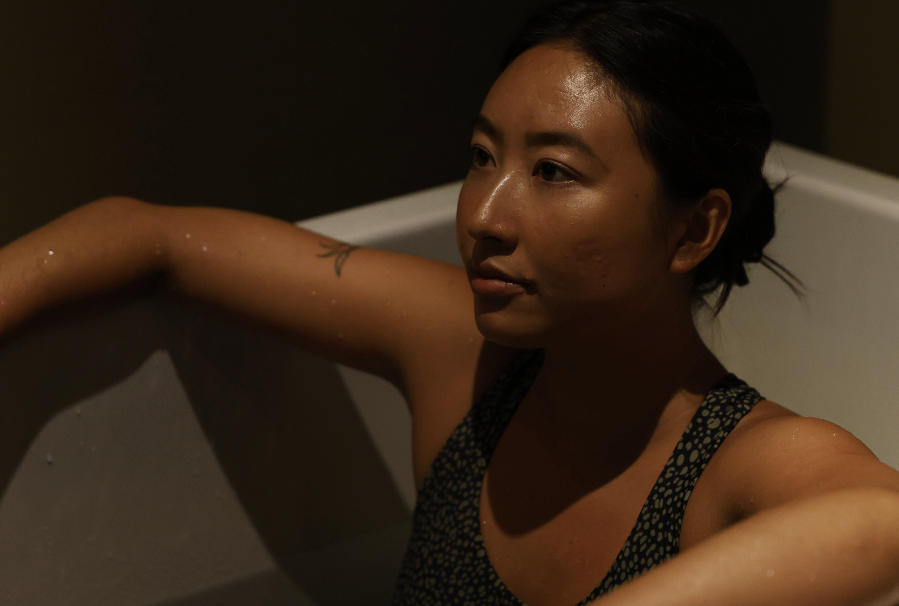
There’s a moment, about ten seconds into the cold plunge, where your brain screams ‘absolutely not.’ Your breath catches, your skin prickles, every instinct says get out.
And then, if you breathe through it, something extraordinary happens.
Your nervous system resets, your blood vessels flush, and dopamine surges. And you climb out feeling more alive, more clear-headed and more you than you have all week.
Welcome to contrast plunge therapy. And if you’re a woman in your 40s, 50s, 60s or 70s? The research suggests this is one of the most powerful things you can do for your body, even in winter!
What’s actually happening
When you move between the hot and cold baths, you’re triggering a powerful physiological response with every transition. The heat causes your blood vessels to dilate, flushing circulation to the surface, relaxing muscle tissue, and easing joint stiffness. Then the cold causes them to rapidly constrict, driving blood back to your core, activating your lymphatic system, and triggering a cascade of neurochemicals your body thrives on.
This pumping action – dilation, constriction, dilation, constriction – is one of the most effective ways to boost circulation, reduce inflammation and mobilise your lymphatic system (your body’s waste-removal network), all without moving a muscle.
The numbers that shocked me
A landmark 2024 UCL study surveyed 1,114 women, the majority going through perimenopause or menopause, about the effects of cold water immersion on their symptoms. The results:
47% reported significant improvement in anxiety
35% reported fewer mood swings
31% reported improvement in low mood
30% reported a reduction in hot flushes
Nearly two-thirds of participants were using cold water specifically to manage their symptoms. And it was working.
The mechanism is real: cold water immersion retrains the autonomic nervous system, the system responsible for regulating body temperature, to respond more efficiently to heat signals. Over time, this means fewer and less intense hot flushes, less anxiety, better mood and a nervous system that isn’t in a constant state of overreaction.
What the science says about each plunge
The cold plunge triggers a dramatic release of norepinephrine (up to 530%) and dopamine (up to 250%). These aren’t small increases; they’re the kind that shift how you feel for hours afterwards. Research from a 2025 randomised controlled trial found that regular cold water immersion over 8 weeks produced significant reductions in anxiety and depression scores. Cold water also reduces pro-inflammatory cytokines – the same signals that drive joint pain, fatigue, and brain fog.
The hot pool is doing equally important work. Hot water immersion lowers resting heart rate, reduces blood pressure, and delivers a form of passive cardiovascular conditioning that’s particularly relevant for women post-menopause, when oestrogen’s protective effect on the cardiovascular system declines. It also deeply relaxes the connective tissue around joints, a genuine relief for anyone whose body tightens up in the winter cold.
Together, you get something greater than either alone, a vascular workout for your whole system, a neurochemical reset and a full-body anti-inflammatory effect that builds with every session.
Your Be Well plunge protocol
Here’s exactly how to use the pools for maximum benefit, based on the evidence:
Beginner (first 2–3 sessions) Start warm, build confidence in the cold.
Intermediate (once you’re comfortable)
Hot pool: 3–5 minutes
Cold plunge: 1–2 minutes
Repeat 2–3 rounds
Always finish on cold.
How cold is cold enough? Research shows the sweet spot for neurochemical benefit is around 10–15°C. You don’t need ice water – you need consistent, sustained cool immersion and controlled breathing.
How many times per week? Research by neuroscientist Dr Andrew Huberman identifies just 11 minutes of cold exposure per week as the threshold for meaningful health benefits. That’s roughly 2–3 sessions of 3–5 minutes each. Consistency beats intensity every time.
When is best? Morning sessions deliver the biggest mood and focus boost. The dopamine and norepinephrine surge from the cold plunge sets a calm, alert tone for the whole day. Avoid cold plunging within 2–3 hours of sleep, as it can be too activating.
There is no badge for suffering
If the cold plunge feels daunting, you’re not alone, and you’re not behind. Start with the hot pool only for your first visit. Then try just 15–20 seconds in the cold. The goal is a sustainable practice that your body learns to love, not a test of willpower.
Hot and cold plunge therapy is one of the most research-backed, time-efficient wellness tools available, and you have access to it every time you walk through our doors. For mood, for hot flushes, for joint health, for inflammation, for cardiovascular resilience, the evidence is compelling, and it only takes minutes.
Go warm. Go cold. Breathe through it. Feel the difference.