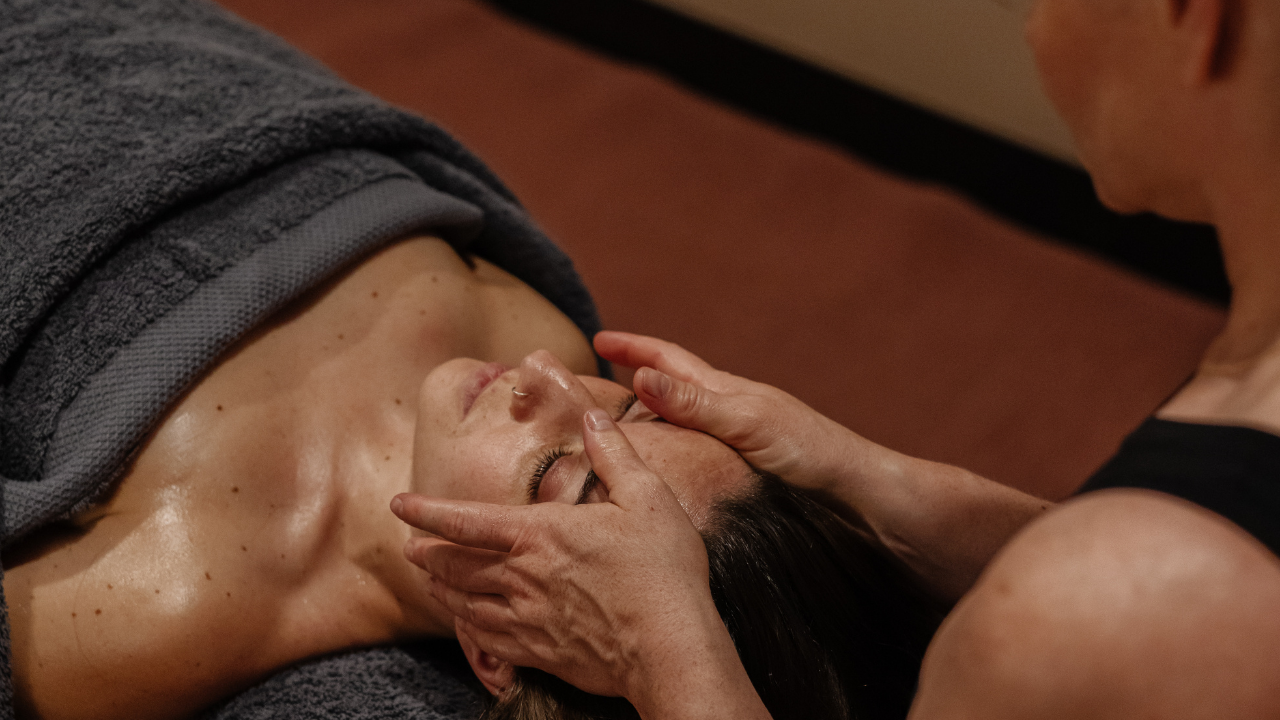
My mother-in-law was big on weekly massages. I thought it was for beauty reasons, but I think I was wrong. It was part of her midlife management program. For too long, I have thought of massage as a reward, something you book when you’ve had a particularly hard week, or as a birthday present or on holiday. A luxury. A splurge. Something nice but not necessary.
The research says otherwise. And if you’re navigating the hormonal, musculoskeletal and neurological shifts of midlife, it says it loudly.
Regular therapeutic massage is one of the most evidence-backed, holistic body interventions available to you. Here’s what it’s actually doing.
What happens during a massage
Within minutes of therapeutic touch beginning, your body initiates a cascade of measurable physiological responses. Cortisol, your primary stress hormone, begins to fall. Serotonin and dopamine rise. Heart rate and blood pressure drop. The parasympathetic nervous system takes over from the chronic low-grade sympathetic activation that most of us are stuck in without realising it.
A single 45-minute massage reduces cortisol levels by up to 31%. That’s not a subtle shift. Chronically elevated cortisol is implicated in disrupted sleep, weight gain around the abdomen, impaired immune function, accelerated bone loss, mood dysregulation and cognitive decline. Reducing it regularly through massage is a genuine intervention.
The menopause connection
A 2024 review and meta-analysis specifically examining massage for menopausal and postmenopausal women found significant benefits across psychological symptoms, anxiety, depression, fatigue and overall quality of life. A separate randomised controlled trial found that connective tissue massage improved physical and emotional health outcomes in postmenopausal women so consistently that researchers recommended it as a first-line approach, meaning before pharmaceutical intervention for mild to moderate symptoms.
The mechanism is partly hormonal, partly neurological. Declining oestrogen affects the production of collagen, the protein that keeps connective tissue, joints, and skin supple. As collagen declines, fascial tissue (the connective web that surrounds every muscle, organ, and structure in your body) can become denser, less hydrated and more restrictive. This is why so many women in midlife describe a creeping stiffness, tightness or achiness that exercise alone doesn’t fully resolve. Therapeutic massage, particularly connective tissue and deep tissue techniques, directly addresses fascial health, restoring hydration, mobility and elasticity to tissue that has tightened with age and hormonal change.
A sleep story
Winter compounds an already difficult relationship with sleep for too many people. Shorter days disrupt circadian rhythm. Night sweats interrupt deep sleep cycles. Elevated cortisol from seasonal stress and reduced light keep the nervous system activated when it should be winding down.
A 2024 randomised study confirmed that massage reduces insomnia severity. A 2025 systematic review found that massage reliably reduces cortisol and activates the parasympathetic nervous system, precisely the conditions your body needs to fall asleep and stay there.
A massage session in the afternoon or early evening is, in neurological terms, one of the best things you can do to prepare your body for deep, restorative winter sleep.
Your immune system is listening
Winter is when your immune system faces its greatest annual challenge, and massage is a surprisingly powerful ally. Reduce chronic stress, lower cortisol and your immune system’s suppressed function begins to recover. Regular massage through winter is, quite literally, an investment in not getting sick.
In the mood
Here’s the finding that reframes everything. Massage triggers the release of oxytocin, the bonding and connection hormone typically associated with love and relationships. A study measuring oxytocin levels before and after massage found a 17% increase in the massage group, while the resting control group showed a 9% decrease. At the same time, ACTH (the hormone that drives cortisol production) dropped 20% in the massage group but rose 30% in those who just rested.
Oxytocin does something remarkable beyond mood: it actively lowers blood pressure, accelerates wound healing, reduces inflammation and is associated in research with improved longevity outcomes. The research describes oxytocin as ‘the more you give, the more you get’. Regular massage sessions build a cumulative physiological benefit that single occasional massages simply don’t replicate.
An infrared sauna before a massage is an exceptional combination. Heat softens fascial tissue, relaxes muscles, and makes therapeutic work deeper and more effective. Many members sauna, then massage and describe it as the most restorative session they have all week.
Most things you do at Be Well, the strength training, the cardio, the sauna, the plunge, the Pilates asks something of your body. Massage is how your body answers back. It’s the recovery that makes the training stick, the stress relief that makes the sleep possible and the physiological reset that keeps you coming back with more capacity than you left with.
Massage is not a luxury. It is not a reward for a hard week. It is a health intervention, and the research is unambiguous about that.
Book it like you mean it.