You know Midjourney, right? The app where you type “wizard riding a dragon over Melbourne” and it spits out a stunning image in seconds? That Midjourney. The one famous for fantasy art and dreamy profile pictures. This week, they announced they’re building a full-body medical scanner.
I had to read that twice too.
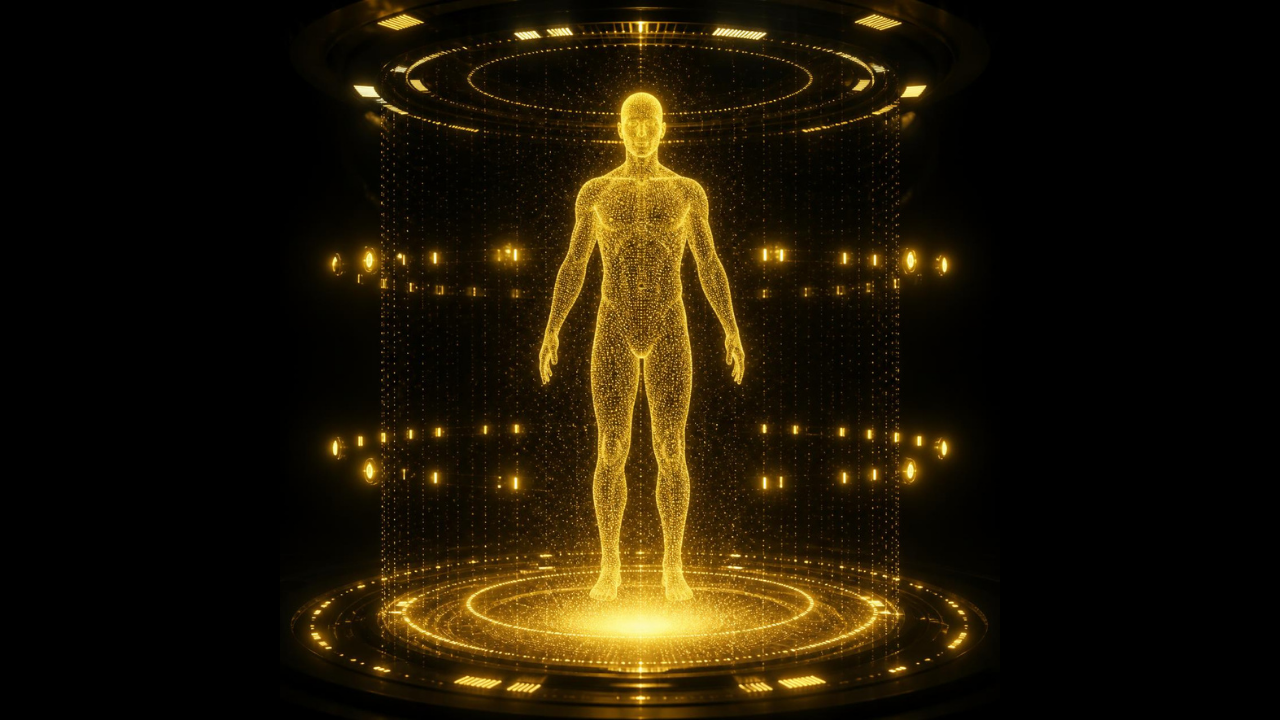
Here’s the pitch: you step onto a platform that lowers you into a shallow pool of light, ringed with half a million tiny sensors, sending sound waves through your body from every angle.
The result is a 3D map of your body down to a fraction of a millimetre, built at nearly a hundred times the speed of a regular MRI. No radiation, no claustrophobic tube, just a pool of golden light and what they’re calling the ‘Midjourney Spa’.
Think of it like the difference between a photographer setting up a tripod and waiting for the perfect shot, versus a hundred people with phones snapping you from every angle at once and stitching it all together. Same result, completely different method, much faster.
Reality check
The actual working prototype right now takes about 20 minutes, not 60 seconds, and has only been tried on a couple of dozen people. It has no approval to diagnose anything yet. It’s launching as a wellness tool that maps muscle, fat and bone, not as a replacement for your doctor’s MRI referral.
The first spa. It opens as an actual spa in San Francisco, with hot tubs and cold plunges, where the scan happens almost as a byproduct of you relaxing.
So why should you care, sitting in Melbourne, not San Francisco? Because this is what happens when AI money and AI confidence start showing up in industries that have barely changed in 50 years.
Whatever you think of an art generator building medical hardware, it’s a signal: the next wave of AI isn’t just chatbots writing your emails, it’s AI companies deciding the human body is their next canvas.
I’ll believe the 60-second scan when I see it working on more than a dozen people. But I’ll be watching this one closely, and so should you.
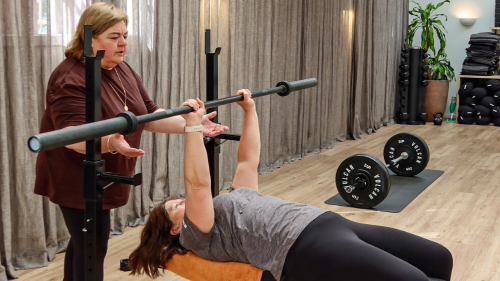
Here’s the thing though, you don’t need to wait for Midjourney’s spa to open. We’ve had body composition scanning on hand at Be Well for a while now, through our Styku scanner, and it’s built into something bigger: our Well On Track program, designed and led by our physiotherapists.
The difference is what happens after the scan. A picture of your muscle and fat is interesting. What a physio does with that picture, building it into a plan that actually changes your strength and longevity, is the part that matters.
So if a tech company wants to spend years and millions chasing the perfect scan, good luck to them. We’ll keep doing the unglamorous work of turning the data into a better decade ahead for you.
See you again at Be Well soon.