Live Well Journal
Issue No.179: What I actually want for David this Father’s Day
This Father’s Day, Skip the Novelty Socks
Send him this instead. A 28-country study found men over 50 face a 60% higher death risk than women, here’s the handshake test that predicts lifespan, the number nobody checks, and the quieter risk hiding behind it all.

Jan Owen AM
Co-founder, Be Well Hawthorn
- PUBLISHEDAugust 30, 2026
With Father’s Day landing on 6 September, I want to give you something better than another gift card or a novelty pair of socks. I want to give you a reason to sit your father, partner, husband, son/son-in-law, brother, male BFF in your life down and say: read this.
Here’s an inconvenient truth.
A study spanning 28 countries and 179,000 people found men over 50 have a 60% higher risk of dying than women the same age. Not a typo. Sixty per cent.
Some of that gap comes down to smoking and heart disease rates. But a lot of it comes down to something simpler: men tend to treat their bodies like a car they’ll deal with when the warning light comes on, not before.
I think of a body like a house. Women, generally, do the routine maintenance, notice the damp patch early, make sure the regular checks are done, etc, all the preventative stuff. Men are often the ones who wait until the roof is actually leaking onto the couch before calling anyone. The trouble is, by the time a health leak shows up, the damage has usually been building for years.
The Handshake That Predicts The Future
Here’s a fact I love because it’s so simple and so hard to argue with: your grip strength predicts how long you’ll live. Not metaphorically. Literally. Researchers have found that for every 5kg drop in grip strength, the risk of dying from any cause rises by around 16%, and cardiovascular death risk climbs by about 21%. A meta-analysis pooling 42 separate studies found people with weak grip strength had a 67% higher risk of early death compared with those who stayed strong.
Why does squeezing a device with your hand say so much about your whole body? Because grip strength is a proxy for overall muscle mass, which is a proxy for how well your heart, nervous system, and metabolism are all talking to each other. Losing muscle after 50 isn’t just about looking less toned. It’s an early warning system, and most men have no idea it’s flashing.
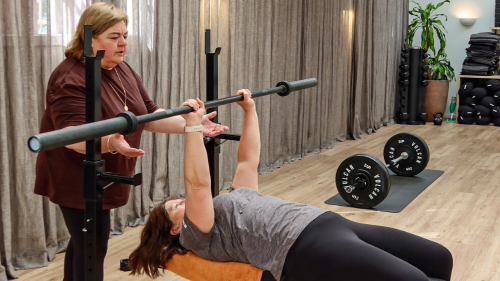
The fix isn’t complicated. Two sessions a week of proper resistance training, done consistently, is one of the single best things a man over 50 can do for his lifespan. Not cardio instead of it. As well as that.
The Number Nobody Checks Properly
There’s a third one worth naming, because it quietly touches all the others: testosterone. Fatigue, stubborn belly fat, low drive, hair thinning, a general sense of running on 70% power. Men wave it off as “just getting older”. Sometimes it is. Often it’s a hormone picture that’s shifted and never been properly looked at.
The maintenance list here is refreshingly ordinary. Sleep is the biggest lever, since most of the body’s testosterone production happens during deep, REM-heavy sleep, so a hot bedroom or a phone at midnight is doing more damage than people realise. Resistance training matters more than any supplement on the shelf. Zinc and selenium, from things like pumpkin seeds, oysters, and a couple of Brazil nuts a day, support the system if he’s actually short on them. And everyday plastics carry chemicals that have been linked to lower testosterone in large population studies, so filtered water and glass or steel containers aren’t just an eco choice; they’re a hormone one.
The part almost everyone skips is the testing itself. A standard GP blood panel usually reports total testosterone and calls it a day. That number alone doesn’t tell you much. What actually matters is free testosterone, SHBG, and estradiol, the markers that show what his body can actually use, not just what’s floating around unavailable. Guessing your way through symptoms gets you nowhere. Getting the right three numbers on paper gets you an actual plan.
The Quieter Threat
The second thing hard research keeps circling back to is loneliness, and men are especially vulnerable to it in a way that’s easy to miss because it doesn’t look like a crisis from the outside. Male friendships are often built around a shared activity, work, sport, the pub, rather than a habit of checking in. So when a man retires, or the kids leave home, or his mates drift, his social world can quietly shrink to almost nothing while everything looks fine on the surface.
The research on this isn’t soft.
Social isolation raises cardiovascular disease risk more sharply in men than in women, and it’s an independent risk factor for early death, on par with some of the physical ones we take more seriously. It doesn’t announce itself with a scan or a blood test. It just erodes things slowly.
Why This Matters To Your Family, Not Just Him
None of this is really about him living longer for his own sake. It’s about him being at your kids’ weddings, meeting grandchildren, still being the person who calls you first with good news, twenty years from now instead of ten. Strength and connection aren’t vanity projects. They’re what keep a family, all kinds of families and communities, whole for longer.
Even the gift guides have caught on to this. Fitness trackers and body composition scales are one of this year’s fastest-growing Father’s Day categories, bought for the dad who’s “deep in his wellness era and wants real data, not guesses”. That instinct is right, but he doesn’t need another gadget gathering dust in a drawer. He needs to actually know his numbers, and then do something about them.
So this Father’s Day, skip the tie. Tell him his grip strength is basically a crystal ball, that muscle is medicine, and that training with others matters as much as the training itself. Then, if you really want to make an impact, bring him in to Be Well and let us help him do something about it.
He’ll roll his eyes. He’ll thank you later.
Happy Father’s Day to David, my amazing husband & co-founder of Be Well, and father and grandfather extraordinaire 🙏
Looking forward to seeing you all at Be Well again soon.
Eating Well Beats Bad Genes
A 10-year study following over 100,000 people found something reassuring: those who ate the healthiest diets lived longer, up to three extra years by age 45, even if they weren’t born with “good” longevity genes. Turns out what’s on your plate can matter more than your DNA.
Source: here
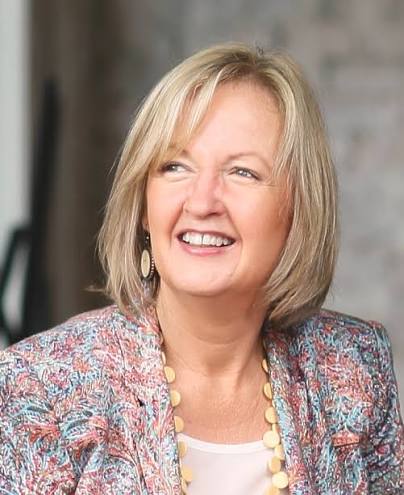
About the author
Jan Owen AM
Co-founder, Be Well Hawthorn · Hon DLit · Social and business entrepreneur
Jan Owen AM is co-founder of Be Well Hawthorn and a social and business entrepreneur with over four decades of experience driving change across education, youth welfare and health. She is the author of Every Childhood Lasts a Lifetime and The Future Chasers, the inaugural Westpac and AFR Overall Woman of Influence, and holds honorary doctorates from the University of Sydney and Murdoch University. Jan was awarded membership to the Order of Australia in 2000 for her service to children and youth.