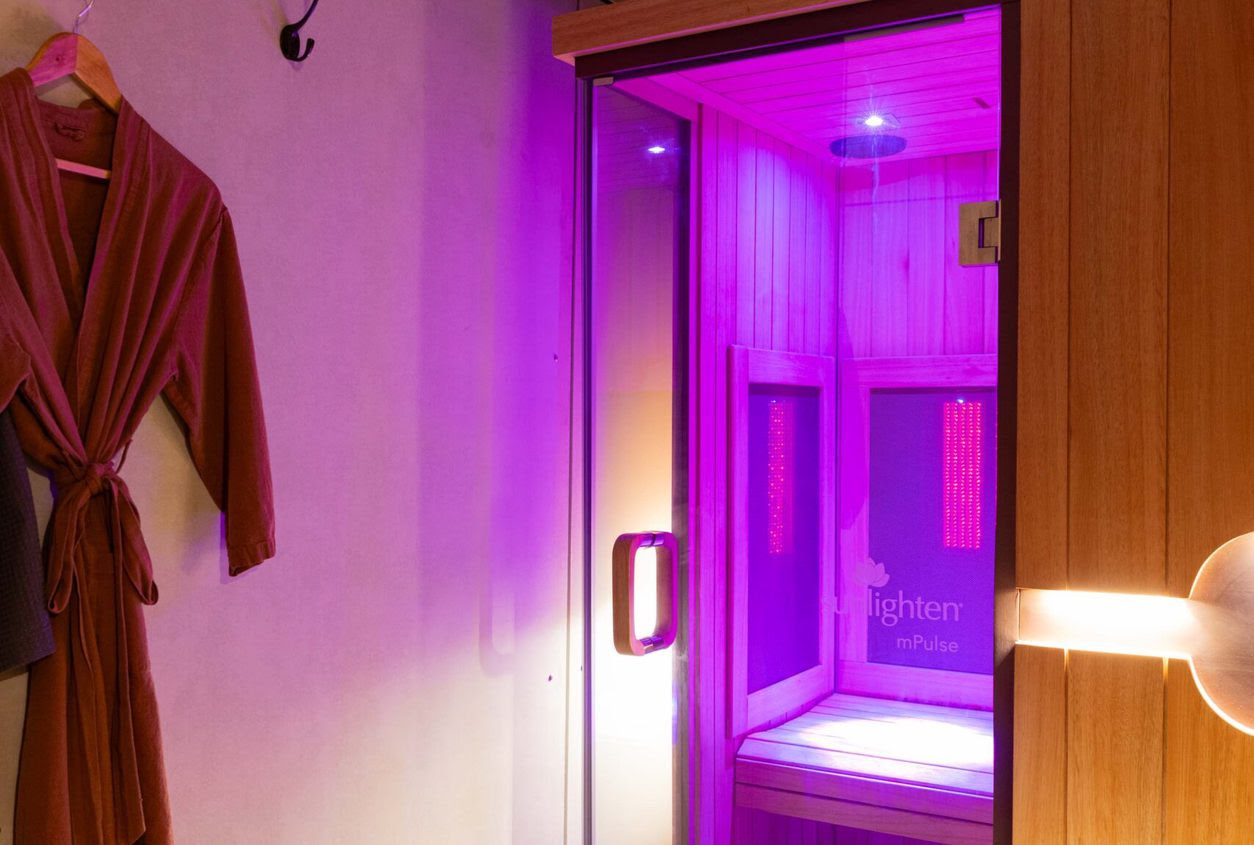
Winter is here, and honestly? We couldn’t be more excited about it.
There’s something almost magical about stepping into the warmth of an infrared sauna when the temperature outside is doing its best to keep you indoors. At Be Well, we think winter is actually the best time to make sauna a regular part of your health and wellness routine. Here’s why we love it, and why science backs us up.
What makes infrared different?
Unlike a traditional steam sauna that heats the air around you, infrared saunas use light to gently warm your body directly. Infrared light penetrates 4–5cm below the skin surface to directly stimulate mitochondria, meaning the real action is happening invisibly at the cellular level, and the heat you feel is almost a side effect.
The result? A deeply penetrating heat at a lower, more comfortable temperature, so you can stay in longer and get more benefit without feeling like you’re melting. Most of our members say it feels less intense but somehow more restorative. We’d have to agree.
What the research actually shows
The evidence on infrared sauna has grown significantly in recent years, and it’s genuinely impressive.
Your heart loves it. A 2024 systematic review confirmed that regular infrared sauna use reduces blood pressure, improves arterial stiffness, and supports long-term cardiovascular health. Think of it as a passive cardio workout; your heart rate rises, circulation improves, and your body works hard, all while you’re sitting still.
Your muscles will thank you. A 2025 study from the University of Jyväskylä found that post-exercise sauna sessions significantly improved neuromuscular recovery and reduced soreness after resistance training. If you’ve been pushing yourself in the gym this winter, a sauna session afterwards is a smart move.
Your mood gets a lift. This one’s big for winter. Research shows a single infrared sauna session can increase endorphin levels by over 200%. A landmark UCSF clinical trial published in late 2025 found that whole-body heat therapy produced meaningful reductions in depression symptoms, with over 86% of participants no longer meeting criteria for major depression at their final assessment. The ‘winter blues’ are real, and warmth is a powerful antidote.
Chronic pain relief. For members managing fibromyalgia, lower back pain or joint stiffness, a 2023 systematic review found 40–50% reductions in pain scores after 8–12 weeks of regular sessions. Consistent, gentle heat makes a real difference.
Making it a winter ritual
We recommend 3–4 sessions per week for 30 minutes each to start seeing cumulative benefits. Hydrate well before and after, and give yourself a few minutes to cool down gradually. Many of our members pair their sauna with a yin yoga afterwards, a ritual that turns a wellness visit into genuine self-care.
Whether you’re coming in after a workout, on your lunch break, or just need somewhere warm and restorative to land on a grey winter afternoon, the sauna is ready for you.
Sauna season is officially open. Come get warm. You’ve earned it.